

World leading science for early dementia prediction
Spun out from the University of Cambridge, we've invented smart ways to use biologically-informed AI for clinical impact
We need new solutions for dementia
We currently lack precise ways to work out each person's subtype and stage of dementia - especially early on when interventions can make the biggest difference.
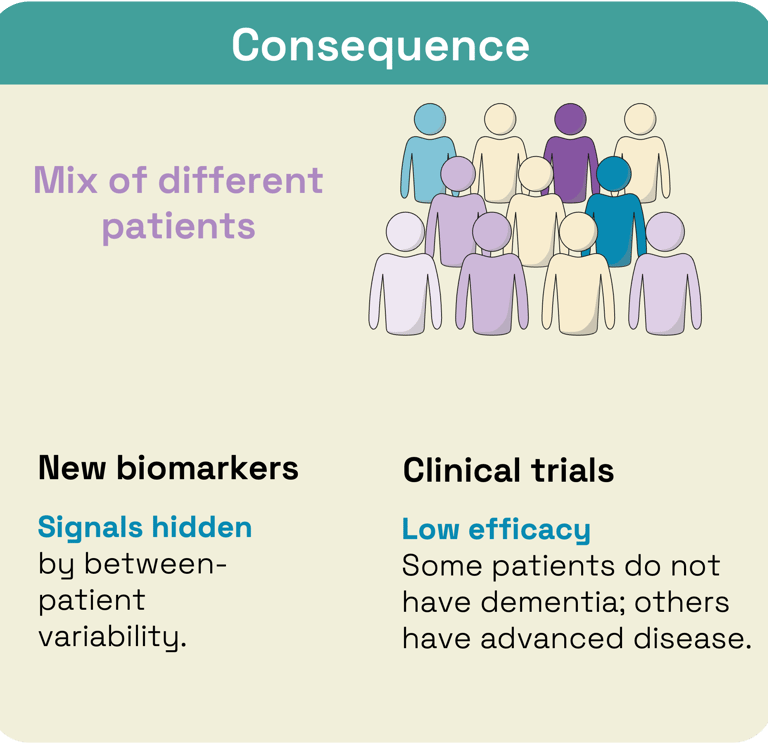
Good drugs won't work if given to people who can't benefit from them
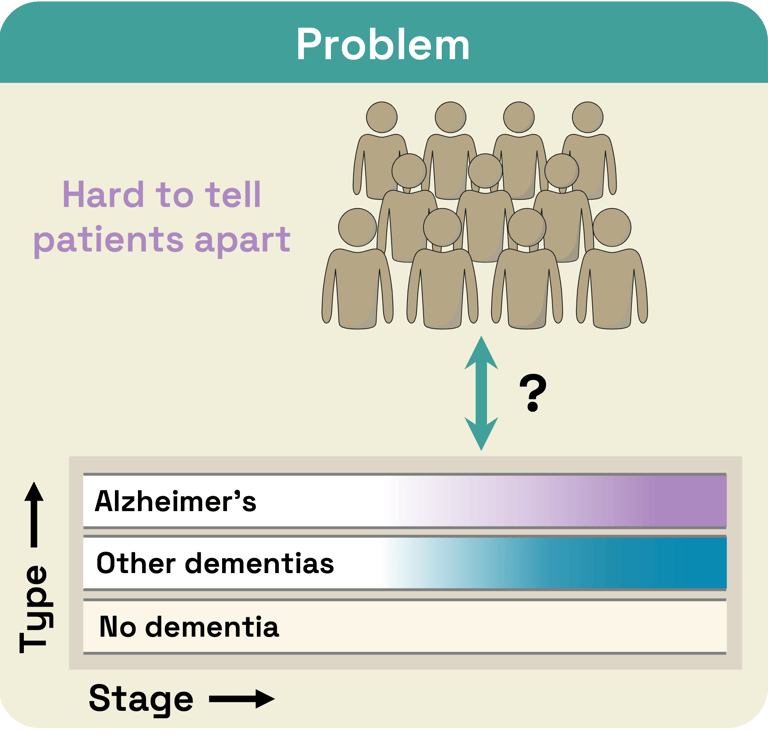

This means that when we study a group of patients, we're often blind to the important differences in disease between people.
Studying a mix of people with different dementia types and/or stages makes it much harder to spot the key signals that help us make progress.

Predict years ahead
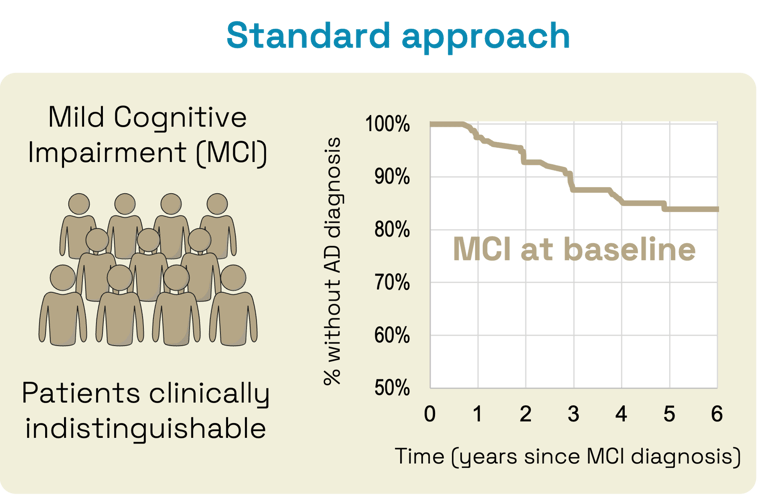
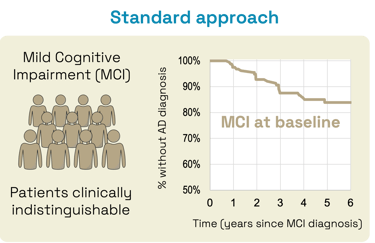
Prodromic transforms understanding of patients:
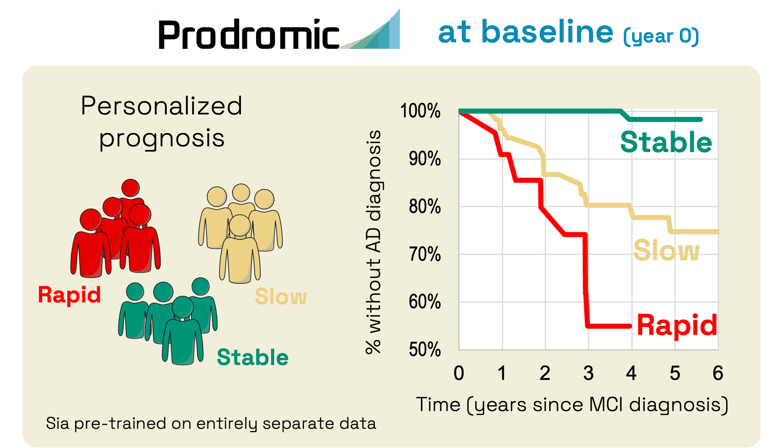
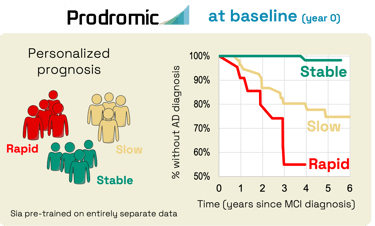
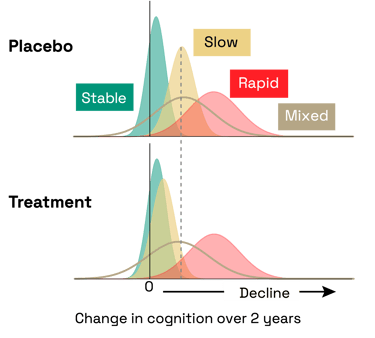
Patients who were apparently ‘the same’ show very different trajectories
Prodromic distinguishes them at baseline with threefold higher sensitivity than standard approaches
Subgroups diverge statistically after just 18 months
The Lancet: eClinicalMedicine, 2024
Transforming the development of new treatments
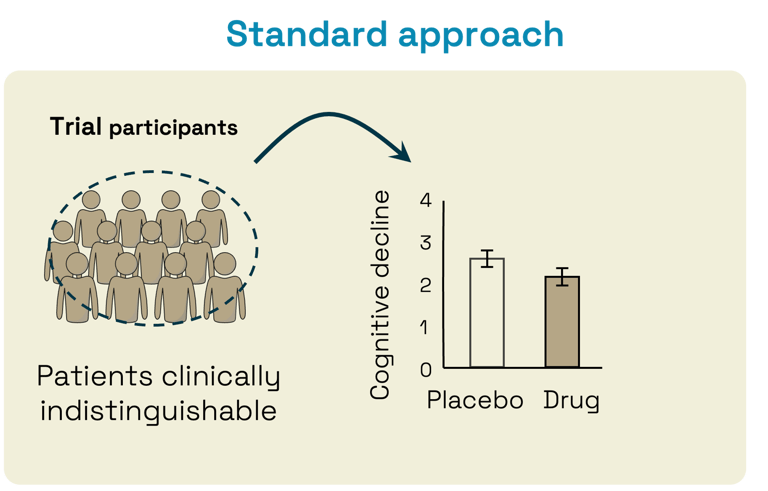
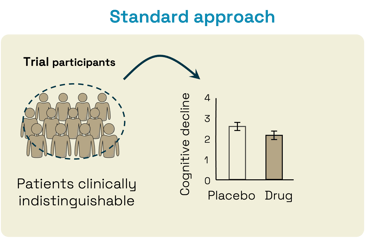
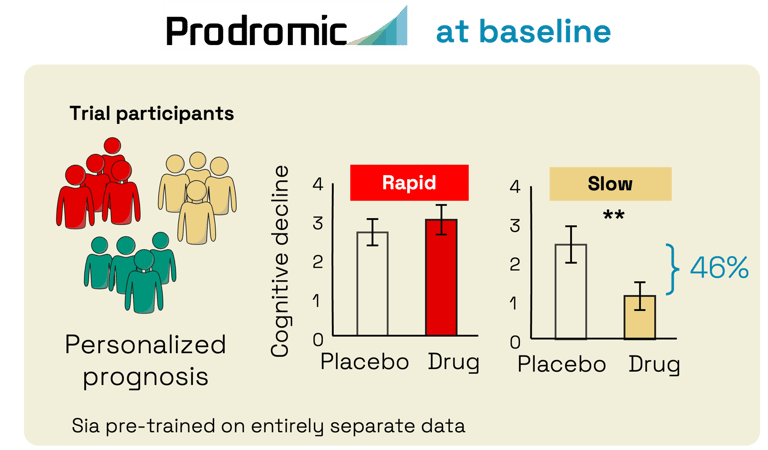
Prodromic uncovers a treatment effect in a large pharmaceutical trial
Therapy believed not to help patients based on standard analysis
Stratifying the patients using only baseline measures revealed that the treatment had worked for a specific group.
Nature Communications, 2025
JPAD, 2026
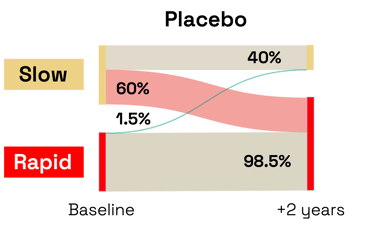
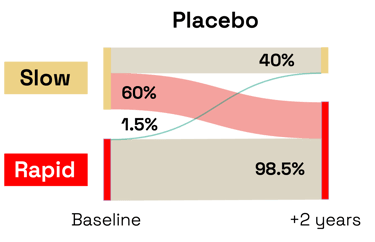
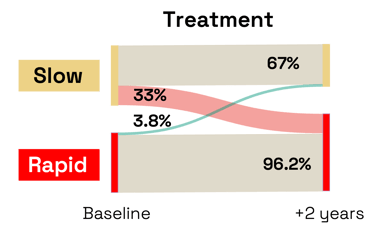
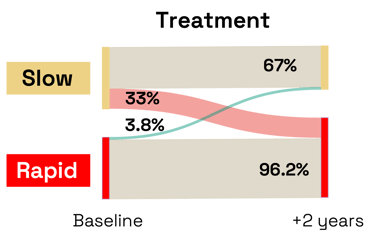
Less progression in the treatment group
"Slowly progressive" patients less likely to become "Rapidly progressive" in the treatment group relative to the placebo.
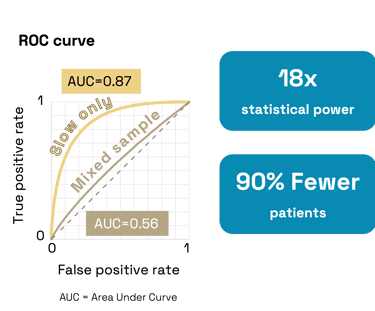
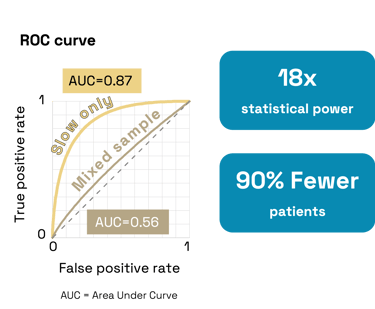
Using Prodromic increases trial efficiency
Modelling trial results with vs. without Prodromic demonstrates the benefits of stratification.
Standard approach - 1,524 patients needed
Using Prodromic - only 164 patients needed
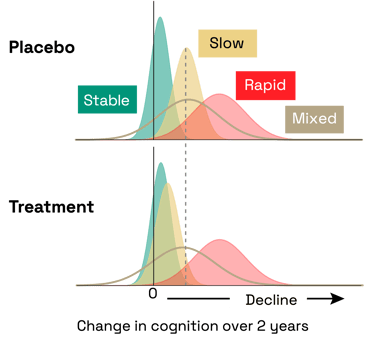
Accelerating new treatments
Prodromic's solutions can identify the right patients for clinical trials to deliver new treatments faster and at lower cost.
Based on re-analysis a previous trial, using Prodromic's technology means:
Fewer patients needed
Higher statistical power
Faster trial readout
Lower costs


Research papers
Prodromic is built on a decade of innovation driven from Cambridge. The work underpinning our technology has been published in a series of papers in leading, international peer-reviewed journals:
Giorgio et al (2020) Modelling prognostic trajectories of cognitive decline due to Alzheimer's disease. Neuroimage: Clinical 26, 102199
Giorgio et al (2022) A robust and interpretable machine learning approach using multimodal biological data to predict future pathological tau accumulation. Nature Communications 13, 1881
Lee et al (2024) Robust and interpretable AI-guided marker for early dementia prediction in real-world clinical settings. The Lancet: eClinicalMedicine 74, 102725
Vaghari et al (2025) AI-guided patient stratification improves outcomes and efficiency in the AMARANTH Alzheimer's Disease clinical trial. Nature Communications.
Welchman & Kourtzi (2026) Solving the 'Goldilocks problem' in dementia clinical trials with multimodal AI. Journal of Prevention of Alzheimer’s Disease.
Coverage of our science
BBC News: AI may diagnose dementia in a day
The Times: AI could diagnose dementia before symptoms show
Sky News: New AI tool could be a game-changer in battle against Alzheimer's
Alan Turing Institute: AI could detect dementia after single brain scan
University of Cambridge: AI outperforms tests at predicting progress of Alzheimer's Disease